Reading, Pennsylvania · Denial Management & Appeals
Denial Management & Appeals in Reading, Pennsylvania
Denial Management & Appeals for Reading medical practices — specialty-aware, denial-ready, and built around Pennsylvania payers.
FYNQ Medical Billing provides denial management & appeals for Reading medical practices as part of full-service Reading medical billing and revenue cycle management (RCM). We categorize denials by root cause, appeal the ones worth appealing with the right documentation, and feed the patterns back upstream so they stop recurring. Reading sits at the center of West Reading Medical Corridor (6th Avenue / Reading Hospital campus), and Reading denial management & appeals has to match the payers, specialties, and documentation that Pennsylvania practices actually deal with.

Important Reading facts
- County
- Berks County, Pennsylvania
- Founded
- 1748; incorporated as a city in 1847
- Nickname
- The Pretzel City
- Size
- Approximately 10 square miles (city proper)
- Metro Population
- Reading MSA approximately 430,000 (U.S. Census Bureau, 2020 Decennial Census)
- Medical Anchors
- Tower Health Reading Hospital (Level I Trauma, largest employer in Berks County) and Penn State Health St. Joseph Medical Center are the two dominant acute-care anchors
Why Reading practices choose FYNQ for denial management & appeals
Reading practices choose FYNQ for denial management & appeals because Reading billing is not generic. The local market brings specific challenges, and our denial management & appeals is built around them:
Our denial management & appeals in Reading
Our denial management & appeals for Reading practices covers the full workflow, tuned to Pennsylvania payers and your specialty:
- Daily denial review and root-cause categorization
- Appeals with payer-specific documentation
- Timely-filing and corrected-claim management
- Trending to fix recurring denial sources
- Escalation on high-dollar and aged denials
How denial management & appeals works for Reading practices
Here's how FYNQ delivers denial management & appeals for Reading practices, start to finish:
1. Free Billing Health Check
We review your current Reading billing — denial reasons, aged A/R, and coding patterns — and show you exactly where revenue is leaking. No patient data, no commitment.
2. Onboarding into your systems
We work inside your existing EHR and practice-management system, map your Pennsylvania payers and fee schedules, and set up secure, HIPAA-aware access. You don't switch software.
3. Coding & clean-claim workflow
Certified coders apply specialty-specific ICD-10, CPT, and HCPCS codes to your documentation, scrub every claim against Pennsylvania payer edits, and submit clean — with eligibility and prior authorization handled up front.
4. Denials, A/R & reporting
We work denials by root cause, chase aged claims, post payments, and send a clear monthly report that compares your Reading practice to benchmarks for your specialty.
Reading at a glance
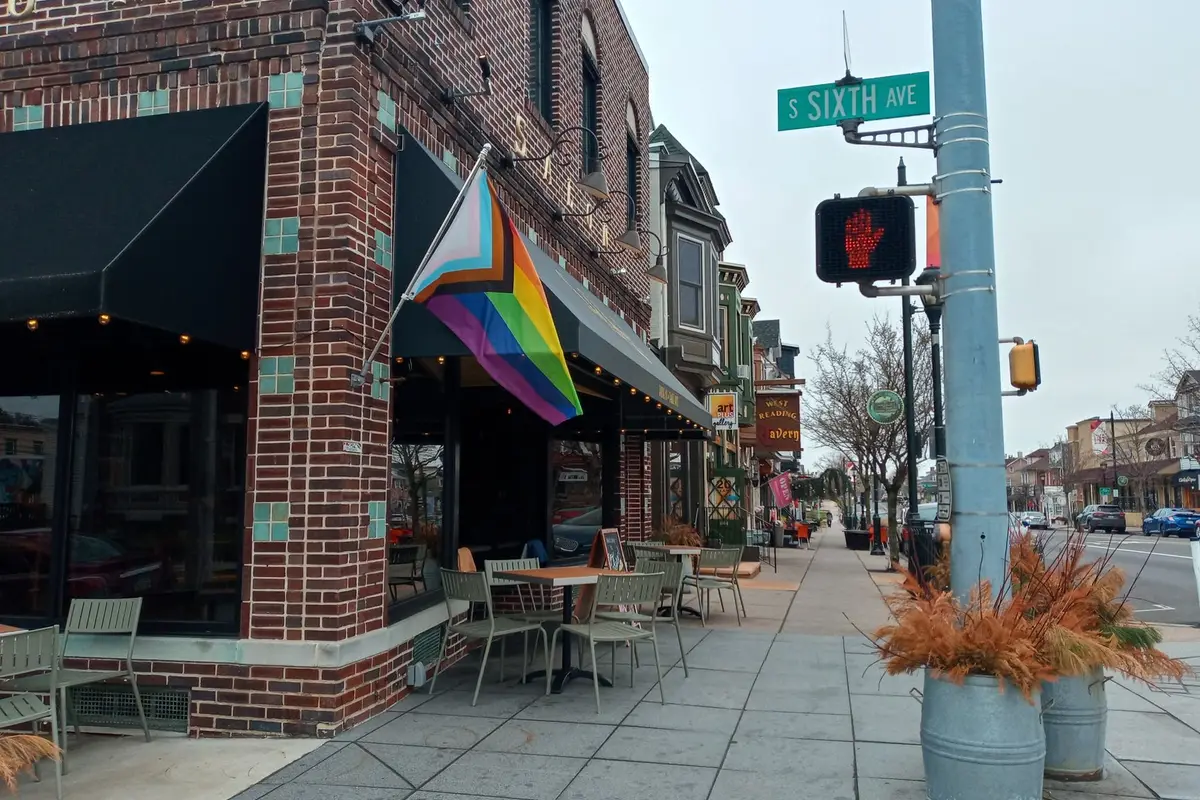





Photos: Samyantak Mohanty, Carol Canfield, K, Gene Samit, Jay Brand, Lobiya, Jonathan Meyer via Pexels
Serving practices across the Reading medical community
West Reading Medical Corridor (6th Avenue / Reading Hospital campus) · Penn Street Health District (downtown Reading community health centers) · Wyomissing / Berkshire Medical Corridor (Route 222 suburban specialty practices)
Major Reading hospitals & health systems
Reading is anchored by West Reading Medical Corridor (6th Avenue / Reading Hospital campus), home to institutions such as Tower Health Reading Hospital, Penn State Health St. Joseph Medical Center, Tower Health Phoenixville Hospital. Independent Reading practices work alongside these systems and compete for the same patients, so accurate denial management & appeals and clean claims are how a smaller Reading practice protects its revenue.
Tower Health Reading Hospital
6th Ave & Spruce St, West Reading, PA 19611
Level I Trauma Center; complex inpatient coding, trauma DRG billing, and multi-specialty physician group RCM
Visit website →Penn State Health St. Joseph Medical Center
2500 Bernville Rd, Reading, PA 19605
Acute inpatient and outpatient billing under Penn State Health network; cardiology and orthopedic service-line coding
Visit website →Tower Health Phoenixville Hospital
140 Nutt Rd, Phoenixville, PA 19460
Community hospital billing within the Tower Health system; ED and surgical coding
Visit website →Tower Health Brandywine Hospital
201 Reeceville Rd, Coatesville, PA 19320
Rural/suburban outpatient and inpatient RCM; behavioral health billing
Visit website →Reading Surgical Center
2752 Century Blvd, Reading, PA 19610
ASC billing and revenue cycle for orthopedic, ENT, and general surgery procedures
Visit website →Berks Heim Nursing & Rehabilitation
1400 Bernville Rd, Leesport, PA 19533
Long-term care and SNF billing; MDS coordination and Medicare Part A/B claims management
Visit website →Universities & medical schools in Reading
Reading's teaching hospitals and medical schools feed a steady pipeline of providers and keep coding standards high — the same standards we hold Reading practices to.
The Reading healthcare landscape
- Reading's healthcare market is anchored by Tower Health's Reading Hospital, a Level I Trauma Center and the largest employer in Berks County, which drives significant specialist referral volume and complex inpatient DRG activity across the region.
- Penn State Health's acquisition of St. Joseph Medical Center introduced a second major health system into Berks County, creating a competitive dual-system environment that affects contracting leverage and payer fee schedule negotiations for independent practices.
- Reading's high poverty rate and large Hispanic population have driven substantial FQHC and community health center infrastructure downtown, including Berks Community Health Center, which shapes the payer mix distribution across the broader market.
- Berks County's aging rural and suburban communities outside Reading generate consistent primary care, orthopedic, and home health billing volume, while the county's manufacturing and logistics workforce supports an employer-sponsored insurance segment anchored by Capital BlueCross and Highmark.
Reading healthcare in numbers
Reading and Pennsylvania healthcare, in numbers worth knowing for denial management & appeals:
- Approximately 430,000 (U.S. Census Bureau, 2020 Decennial Census) — Berks County PopulationSource: U.S. Census Bureau
- Approximately 95,000 (U.S. Census Bureau, 2020) — City of Reading PopulationSource: U.S. Census Bureau
- (fill in) — contact PA Department of Human Services for current enrollment figures — Medicaid Enrollment — Berks CountySource: PA Department of Human Services
- Elevated relative to state average; Reading has one of PA's highest poverty rates (U.S. Census Bureau ACS) — Uninsured Rate — Reading CitySource: U.S. Census Bureau ACS
- Approximately 700+ licensed beds (Tower Health public disclosures) — Tower Health Reading Hospital Licensed BedsSource: Tower Health
- Approximately $62,000 (U.S. Census Bureau ACS 2022) — Berks County Median Household IncomeSource: U.S. Census Bureau ACS 2022
Around Reading
Landmarks: Pagoda (Skyline Drive Landmark), Mid-Atlantic Air Museum, Reading Public Museum, GoggleWorks Center for the Arts, Outlet Shopping District (VF Outlet).
Parks & green spaces: Nolde Forest Environmental Education Center, Neversink Mountain Preserve, City Park (Reading), Blue Marsh Lake (Army Corps of Engineers Recreation Area).
Pro sports: Reading Fightin Phils (MLB Double-A (Philadelphia Phillies affiliate)), Reading Royals (ECHL Professional Hockey), Philadelphia Eagles (NFL (regional following throughout Berks County)), Philadelphia Phillies (MLB (primary MLB market for Berks County)).
Major payers: Medicare (Traditional Fee-for-Service) — primary payer for Berks County's significant senior population, Medicare Advantage plans including UnitedHealthcare, Humana, and Aetna with active PA Medicare Advantage contracts, Medical Assistance (PA Medicaid) administered by the Pennsylvania Department of Human Services via managed care organizations, Geisinger Health Plan — active commercial and Medicaid managed care plan in the Reading/Berks County market, Capital BlueCross — regional Blue plan with strong commercial presence in southeastern/south-central Pennsylvania, Independence Blue Cross (IBX) — dominant Philadelphia-area Blue plan extending into Berks County employer groups, Highmark Blue Shield — statewide PA plan with commercial and Medicare Advantage products in Berks County, CHIP (Children's Health Insurance Program) administered through PA DHS — significant enrollment given Reading's demographics.
Illustrative example (not a guarantee): a Reading specialty practice seeing frequent denials on a high-volume code set might work with FYNQ to tighten documentation, code selection, and prior authorization — the kind of pattern our denial management & appeals is built to catch and correct. Results vary by practice, payer mix, and documentation; FYNQ does not guarantee specific revenue or collection outcomes.
Denial Management & Appeals for every specialty in Reading
FYNQ provides denial management & appeals and full medical billing for Reading practices across every specialty we serve. Each links to specialty-specific billing for Reading:
Denial Management & Appeals in Reading — FAQs
Do you offer denial management & appeals for Reading practices?
Yes. FYNQ Medical Billing provides denial management & appeals for Reading, Pennsylvania medical practices as part of full-service Reading medical billing and revenue cycle management. We chase down every denial and fight to get it paid.
What makes Reading denial management & appeals different from a national billing company?
Reading billing runs on Pennsylvania payers — Medicare (Traditional Fee-for-Service) — primary payer for Berks County's significant senior population, Medicare Advantage plans including UnitedHealthcare, Humana, and Aetna with active PA Medicare Advantage contracts, Medical Assistance (PA Medicaid) administered by the Pennsylvania Department of Human Services via managed care organizations, and Texas Medicaid managed care — and on the specialties concentrated around West Reading Medical Corridor (6th Avenue / Reading Hospital campus). We tune denial management & appeals to those rules instead of a one-size-fits-all template.
Which Reading payers do you work with?
We work across the major Reading payers, including Medicare (Traditional Fee-for-Service) — primary payer for Berks County's significant senior population, Medicare Advantage plans including UnitedHealthcare, Humana, and Aetna with active PA Medicare Advantage contracts, Medical Assistance (PA Medicaid) administered by the Pennsylvania Department of Human Services via managed care organizations, Geisinger Health Plan — active commercial and Medicaid managed care plan in the Reading/Berks County market, Capital BlueCross — regional Blue plan with strong commercial presence in southeastern/south-central Pennsylvania, Independence Blue Cross (IBX) — dominant Philadelphia-area Blue plan extending into Berks County employer groups, Highmark Blue Shield — statewide PA plan with commercial and Medicare Advantage products in Berks County, CHIP (Children's Health Insurance Program) administered through PA DHS — significant enrollment given Reading's demographics.
Can FYNQ work with our existing Reading EHR or practice-management system?
Yes. We work inside your current system, so your Reading practice does not have to switch software to start denial management & appeals.
Do you handle Texas Medicaid (STAR / STAR+PLUS) coding and claims?
Yes. Texas Medicaid runs through STAR and STAR+PLUS managed-care plans, each with its own rules; we code and submit to those plans the way they expect.
How does Texas not expanding Medicaid affect billing for Reading practices?
Texas has not expanded Medicaid and carries one of the highest uninsured rates in the country, so Reading practices see more self-pay and charity-care work. Clean coding and clear patient billing matter more here than in expansion states.
Do you support specialty practices near the West Reading Medical Corridor (6th Avenue / Reading Hospital campus)?
Yes. The Reading market is specialty-dense — oncology, cardiology, and more — and our denial management & appeals is set up for specialty code sets, modifiers, and prior authorization.
Is FYNQ HIPAA-aware?
Yes. FYNQ uses HIPAA-aware workflows. Our public website never collects patient health information (PHI); we work with practices, not patients.
How do we get started with Reading denial management & appeals?
Start with a free Billing Health Check. We review your Reading medical billing, show where revenue is leaking, and outline how denial management & appeals would work for your practice — no patient data and no commitment.
Are you based in Pennsylvania?
FYNQ is U.S.-based with offices in Houston, TX and Little Rock, AR, and serves Pennsylvania practices and clinics nationwide.
Does FYNQ guarantee a specific clean-claim rate or revenue increase?
No. FYNQ is a B2B Reading medical billing partner and never guarantees specific revenue or collection results. We focus on the process — clean claims, worked denials, and clear reporting — designed to improve billing performance over time.
Can you also handle denials, A/R, and credentialing for our Reading practice?
Yes. Denial Management & Appeals is one of eleven revenue-cycle services we offer — alongside denial management, A/R follow-up, credentialing, eligibility and prior authorizations, and more — so a Reading practice can hand off as much or as little as it wants.
What does denial management & appeals cost for a Reading practice?
Pricing depends on your claim volume and how much of the revenue cycle you hand off. The free Billing Health Check includes a transparent scope and quote for your Reading practice — with no obligation.
How long does it take to onboard a Reading practice?
Onboarding timelines depend on your systems and payer mix; we scope a realistic timeline for your Reading practice during the Billing Health Check, and we work inside your current software so there's no migration.
Do you work with small Reading practices or only large groups?
We focus on independent practices — typically 2–20 providers — which are exactly the Reading clinics that feel billing and coding complexity the most.
Also serving Reading practices
Authoritative references
Free Billing Health Check for Reading practices
No commitment, no patient data — just a clear look at your Reading denial management & appeals.
Start My Free Health Check →Free Billing Health Check
Denial Management & Appeals built for Reading practices.
FYNQ Medical Billing provides Reading medical billing and revenue cycle management — start with a free Billing Health Check.
Start My Free Billing Health Check →Or call us directly: (346) 559-3500